I should be reading more books.
Yup, chances are that this thought has already crossed your mind at least once.
Developing an effective reading habit is something that is emphasized a lot.
Bill Gates and Mark Zuckerberg publish curated reading lists to highlight the point that books have been a vital tool in their journey to success.
Warren Buffett says, “I just sit in my office and read all day.”
“In my whole life, I have known no wise people(over a broad subject matter area) who didn’t read all the time – none, zero.”
— Charlie Munger, Vice Chairman of Berkshire Hathaway
A simple google search on reading throws up thousands of articles by reputed publishers on topics covering the range of “How to Read”, “What to read” and everything in between. Quora, the popular question answer site shows millions of followers on the topic of Books and Reading.
Personally, I like to think of reading as “mastering the best of what other people have already figured out”. Since centuries, it has been the easiest tool available to us that enables us to go to bed smarter than when we woke up.
For some people, reading comes easy and naturally. These are bibliophiles who use the words like “voracious” and “avid” to describe their reading habits.
But I am willing to bet that the population of the above people is way less than those who struggle to develop an effective reading habit.
Why can’t I read every book as effectively as I read Harry Potter?
I have been an avid reader of books since my childhood.
As a teen, my favourite book was the Harry Potter series. I was heavily involved in the characters, the storyline and all the teeny-tiny details of the magical universe. So much was the craze, I prioritized the Potter books over my exam studies.
But as I grew up, things changed. I found that it was getting difficult to hold my attention to complete a book. As someone who could never tire of Harry Potter re-reads when I was young, suddenly it became a struggle to even finish a few pages.
Something had changed. I found out that the experience had become a little less fun and a little less cherishable.
And on some primary research, I discovered that I am not alone in this.
Some common statements I regularly heard from my friends were
“I can’t seem to finish the books I have started. I really want to get a move on, but somehow it just doesn’t happen.”
“I struggle to pick new books at the store. I am afraid that I will lose interest in between. What if it doesn’t turn out the way I expected?”
Sounds familiar, right?
I wanted to understand why this happened.
Is there a way we can use to create an effective reading habit? Can reading books become easier for those who struggle with it?
In this post, I share with you few interesting concepts that I came across during my research. I hope they help you approach reading effectively, so that you can increase your knowledge of the world by reading more and more books effortlessly.
How does our brain really process information?
There has been a lot of research in the area of how our brain takes information, processes it and stores it for future reference. One of the most widely cited academic papers talks about the idea of associate networks in our brain. This concept has also been widely discussed by the Nobel Prize winning author Daniel Kahneman in his book “Thinking Fast and Slow.”
I have tried to explain the similar idea in easy understandable terms.
Every concept or a piece of information that you know up until now, is represented in your brain as a node. This node is a part of a huge network of nodes, each connected to other via multiple links.
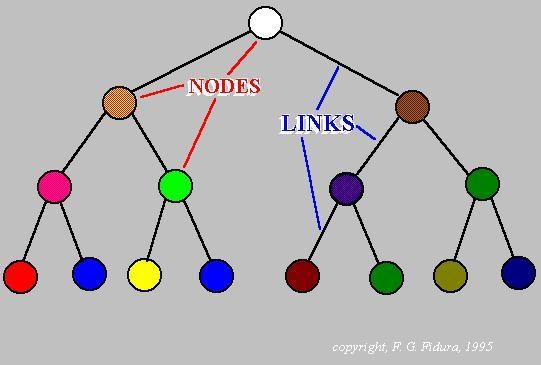
Now, whenever you come across any information in your daily life, there are three major possible scenarios that can take place.
A disclaimer here is that this is an extremely basic representation of the original topic. But nevertheless, it is useful for our discussion.
- Something familiar and true: In this case, our brain already has a node for that concept and if the information is familiar, the node and the links connecting it get stronger, increasing our belief in that concept. It also activates connected nodes, which integrate together temporarily and help us process that information.
- Something familiar and false: In this case, our brain already has a node for this concept but the information is not true. In this case, the node and the connecting links get weaker, since the information is not corroborating what we already know. There is a sense of doubt and your belief in that concept becomes weak.
- Something totally unfamiliar: In this case, we are encountering something new. This concept is entering in our brain in a conscious way for the first time. This will create a new node tagged to that concept and new links will be formed between that node and related nodes and our associative network will widen.
Nick Kolenda, a famous researcher on the subject of psychology of design and persuasion explains how associative networks work with a brilliant video. I recommend you have a look before you read further.
Cognitive Ease – Our Brain’s Ultimate Fantasy
Closely related to the above concept of associative networks is the idea of cognitive ease, an idea I discuss in my other post on how we can learn new things more effectively.
A fundamental truth about our mind is that it aims for “Maximum Satisfaction at Least Effort”. This tendency resists any sort of activity that involves exertion, increased concentration or hard work.
Daniel Kahneman explores this concept widely in his book Thinking Fast and Slow
“We have to remember that our System 2(a term used to describe our conscious brain and self) is lazy and mental effort is aversive to us.”
That’s why we feel so hesitant in starting our exercise workouts or even getting out of our beds in the morning.
What does this all have to do with reading effectively?
I have thrown a lot of science and technical stuff at you and I don’t blame you if you are thinking that “Dude, I just wanted to know how to read better.”
Don’t worry. Hang on. We are almost there.
When I went through the above research, I realized something that had changed in my reading habits.
As I started getting older, I had substituted reading Fantasy Fiction genre of books with genres like Business, Self-Help and books which were much more technical in nature. Clearly, there was a big gap here. I went from what was familiar to what was completely unfamiliar to me in a very short span of time.
We now know through the idea of associative networks, that it takes harder to process new information when there are no familiar existing nodes or connecting links. Our brain is registering new information in a new node and making new links for the first time and this is hard work.
Consequently, our brain has to go from the state of being in a cognitive ease to a state of being in a cognitive strain. This is not desirable.
You must have noticed that while reading some of these books, you get the sudden urge to do absolutely anything else rather than to continue reading the book. You will check your phone, you will aimlessly meander around the house and you will learn the contents of your fridge by heart. All of the above things seem attractive as opposed to reading one more page of that book.
This is your brain telling you “Bruh, Cognitive Strain!”
How to Read with Cognitive Ease?
The key takeaway for readers from the idea of associative networks and cognitive ease is that you start with what’s familiar.
Sometimes, because of peer pressure or because of the glamour of best-sellers, we fall into the trap of reading something that we are not familiar with, books that are a completely new genre for us.
What happens then?
Our existing associative network is of no help since new nodes have to be created for the new concepts and this is a slow process. This means hard work and concentration, which means going against the idea of cognitive ease.
Starting a book with something that you can relate to is the key to develop a consistent and effective reading habit.
Have you considered why Marvel and DC comic books or even the Harry Potter series is such a big hit amongst the children and young adults?
In case of comic books, the story is always about someone who is different from others, who feels singled out for some reason and he does not fit into the normal scheme of things. This idea resonates with a lot of children since it is a sensitive age and they are struggling to make sense of who they are. There is an existing associative network which resonates and reflects their sensitivity.
A troubled kid might see himself as one of the X-men, someone who is different from others, with his own superpowers. Maybe the story of Batman resonates deeply with a kid who unfortunately lost his parents.
Jim Kwik, a world renowned motivational speaker, speed learning and reading expert, actually shares his story of how comic books about X-Men helped him read better and more effectively.
“I struggled to keep up with my classmates and never felt like I fit in. In fact, I learned to read by studying the words and pictures of my favorite comic books: Spider-Man, Batman, Avengers and Fantastic Four.
But my favorite was always the X-Men. Not because they were the strongest, but because, like me, they struggled because they were different.”
– Jim Kwik
In the Harry Potter series, the character of Harry who is just 11 years old in the first book, grows up with his readers. He has his moral dilemmas, troubles with friendship and emotional situations, which every kid goes through.
The point I am trying to make is that as a kid, these books involved you in their journey, they struck familiar chords in your brain’s associative network and hence the reading became pleasant.
Your brain did not have to struggle for concentration but rather the strengthening of the links between the nodes was an activity of pleasure. Cognitive ease associated with pleasant feelings made it an enjoyable read.
Probably, this is why you still love picking up the old Potter books and give them a read.
Once you understand how the brain functions, the art and habit of reading takes on a new meaning. When you come across something new, it is better to try and connect the new concept with a link to an existing node.
Slowly but steadily, you will build up on your associative network, strengthen your links and have a broader understanding of the world and you will be far ahead in your path of becoming a lifelong learner.


2 Comments
The Psychology of Commitment and Consistency: How to make your New Year Resolutions stick? - The Evening Project · January 5, 2019 at 2:22 am
[…] Being consistent is also associated with cognitive ease, an idea that I have previously discussed in the context of learning new things and developing an effective reading habit. […]
How to choose your next book wisely? - The Evening Project · January 19, 2019 at 11:49 am
[…] picking up the right book is a great first step, developing an effective reading habitshould be your next […]
Comments are closed.