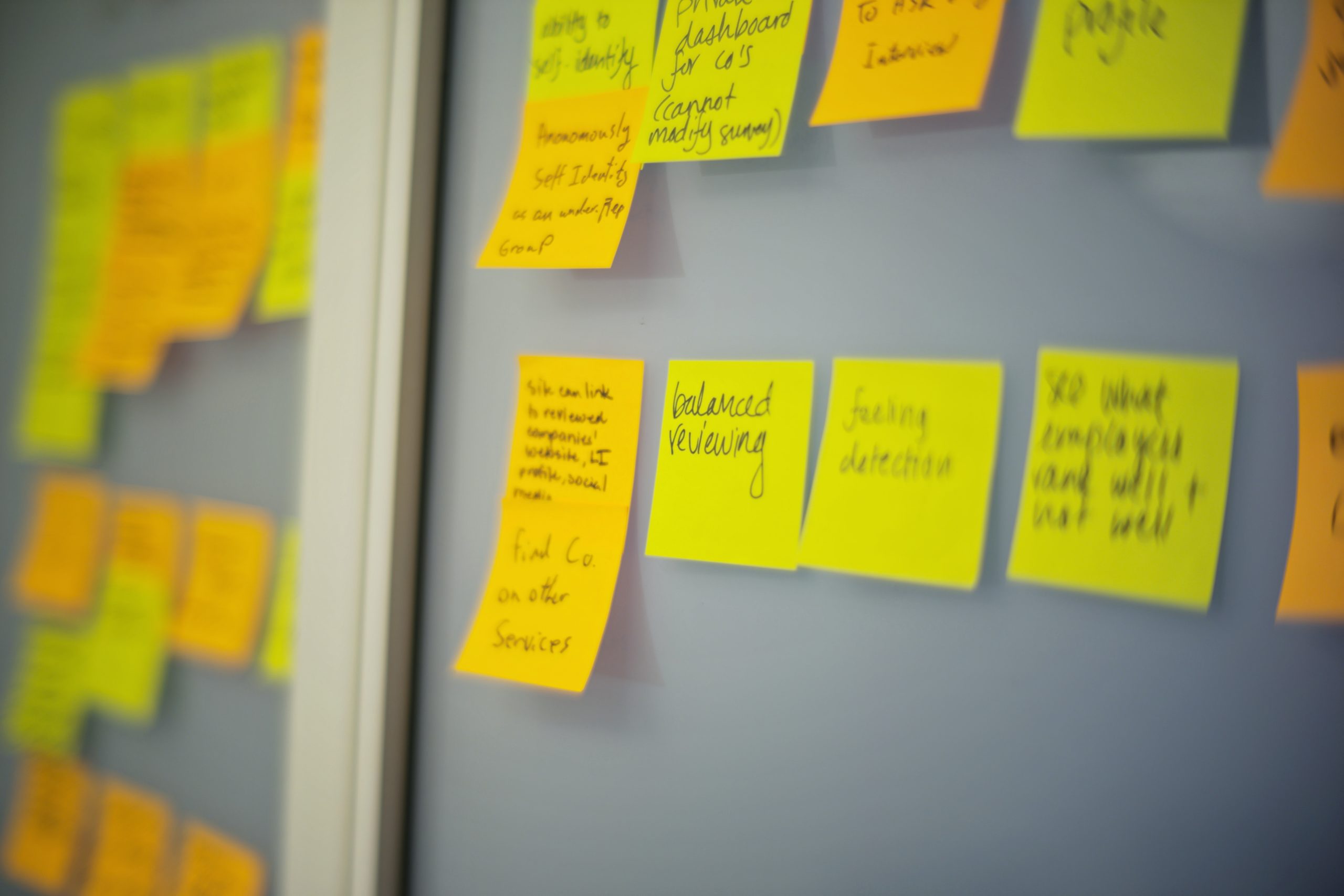
Does this sound familiar to you?
“I have a list of tasks in my head about the things that I need to get done. But somehow it has been five days already and I still haven’t completed any of them.
They are still in my head and I keep reminding myself about how I need to complete them. Now I am wondering why I need these reminders about task competition in the first place. This is making me feel even more agonized than I was before.”
Mark Manson, a famous self-help author, calls this “The Feedback Loop from Hell.”
As humans, we have a unique luxury of thinking about what we are thinking. This means that you can spend hours watching memes on Facebook, and then immediately think about how utterly unproductive you have been in the time you watched those memes.
When we keep agonizing about how we made task lists but didn’t do the tasks, it makes us overly stressful and low on self-confidence. Because of the feedback loop from hell, we feel bad about feeling bad. We feel guilty about feeling guilty.
But what if we could short-circuit the feedback loop from hell?
What if we found a better way to approach our task lists and action items? Can we optimize our small tasks to help us make exponential progress towards our big goals?
Instead of giving grief to ourselves for not completing the tasks we intended to complete, can we find a way to execute and finish these tasks so that they can give us exponential productivity benefits?
In this post, my objective is to provide a different perspective on the idea of task lists and action items. I want to take multiple interesting ideas on this subject and connect them to showcase how completing tasks, especially the small ones, can be powerful and productive.
Every task is a collection of small things
Rijuta Diwekar is a leading nutrition and science expert and the author of an interesting book called “Don’t Lose Your Mind, Lose your Weight.
In this book, she shares stories of her interactions with her clients regarding weight loss. Now, Rijuta is a strong believer in the idea that a diet should be a representation of your normal lifestyle and that means you can’t live
“The word Diet has become synonymous with drastic weight loss and big changes in eating habits. When I insist on making small changes and tweaks to my client’s diet, they are almost disappointed. They accusingly ask me: But where is the diet in all this?”
– Rijuta Diwekar
The idea behind using this example is to highlight the fact that our culture and mindset focuses a lot on making big changes. We easily believe that taking big steps will automatically lead to big results.
Take an example from your own life. Suppose you made a resolution of Getting Fit and Healthy on one fine day. Chances are that the very next day, you would have spend an hour or more in the gym doing all kinds of exercises.
This happens because we decide to make a drastic change to get a drastic outcome. Consequently, we tend to think and make our task lists in the same way.
But as we may have painfully realized, this is not a simple cause and effect relationship. Big tasks don’t necessarily lead to big results. It’s very hard to go from no exercise at all to hours of doing everything in the gym the very next day.
This is why we need to change this approach.
Tim Urban, the author of the popular blog Wait but Why says it the best when he talks about planning tasks to beat procrastination.
“Effective planning turns a daunting item into a series of small, clear, manageable tasks. We need to see ourselves as gritty construction workers, who methodically lay one brick after the other, day after day, without giving up, until a house is built.”
– Tim Urban
The idea here is to break down a task or an activity. Rather than seeing it as some big thing that we have to achieve, we need to see it as an aggregate of even smaller tasks and activities.
In the real world, one of the fields in which the above idea takes on a lot of importance is the sport of Test Match Cricket.
Take a look at what Virat Kohli said about the recent series against Australia
“The takeaway from this tour obviously will be the way we play our cricket and the mindset, and the attitude that we maintain. No one can guarantee results, but just wanting to win every session and every ball that we play, if we can carry that on for the length of the tour, I will be really proud as a captain and we will be really proud of ourselves as a team.”
– Virat Kohli
Test Cricket is a longer and harder format of the game, where winning is heavily dependent on how you play each session of the longer innings. A big task of winning the game has been broken down into understanding the game in terms of sessions and then winning each session.
It is quite evident that in order to accomplish a bigger task, we have to learn to observe it in terms of smaller tasks.
With this understanding in mind, the obvious logical question that comes up is “What is the power of these small tasks? How do they help us in winning big?
The Exponential Power of Small Wins
Usually, the benefit of doing small things is not immediately visible.
When we make small choices, like just going for a 10-minute walk or reading a page of a book every day, it doesn’t seem much to us. It feels like we are playing a trick on our minds, fooling and distracting ourselves from the big tasks that matter.
We are so consumed by the big end goals, that to think of tasks in these small ways seems trivial. However, because of this, we are missing out on something really important. Take, for instance, the story of a war veteran.
US Navy Admiral William
“If you want to change the world, start off by making your bed. If you make your bed every morning you will have accomplished the first task of the day. It will give you a small sense of pride and it will encourage you to do another task and another and another.
By the end of the day, that one task completed will have turned into many tasks completed. Making your bed will also reinforce the fact that little things in life matter.
If you can’t do the little things right, you will never do the big things right.”
– Admiral William Mcraven
For someone training to become a real warrior, a tough battle-hardened SEAL, surely this small mundane task would be seem to be the most trivial thing ever. But as it turns out, Admiral Mcraven believes that the wisdom of this simple act has been proven to him many times over.
Angela Duckworth, the New York Times best-selling author of the book Grit: The Power of Passion and Perseverance, spent years in researching the qualities of successful people that lead them to outstanding achievements.
An excerpt from her book says
“Superlative performance is really a confluence of dozens of small skills or activities, each one learned and carefully drilled into habit and then fitted together as a synthesized whole. There is nothing extraordinary about any of those small actions; only the fact that they are done consistently and correctly, and together, they produce excellence.”
– Angela Duckworth
Doing small things is not jazzy or attractive, but that’s what constitutes greatness. This means that we have to allow ourselves time for these small activities, slowly but gradually start taking pleasure in making the little, secondary things proper rather than just focusing on the dazzling whole.
Trello, a web-based project management application, is widely known in the business world for its usefulness in the area of creating task lists, task collaborations, and increasing overall productivity. On one of their blogs, they talk about the neurological power of accomplishing small tasks.
“When we experience even small amounts of success, our brains release dopamine, which is connected to feelings of pleasure, learning,
and motivation. When we feel the effects of dopamine, we’re eager to repeat the actions that resulted in success in the first place. Neuroscientists refer to this as “self-directed learning.” This is why achieving small goals is such an effective way to stay motivated during long-term projects and processes.”
Yet another example of committing to small acts comes from the eminent psychologist Dr Robert Cialdini’s work on Influence and Persuasion.
In his research, he makes use of ample empirical evidence as well as scientific understanding to prove that even a small act of commitment, something as simple as walking 10 minutes or reading a single page of some book, goes a long way in ensuring consistency. According to him, this happens because small commitments reinforce a new identity for ourselves.
“What may occur is a change in the person’s feelings about getting involved or taking action. Once he takes an action, even a small one, his attitude may change, he may become, in his own eyes, the kind of person who does this sort of thing.”
– Dr. Robert Cialdini
As anyone familiar with the concept of compound interest can tell you, little acts, little tasks, little things,
So how do we do that?
How do we start small for our big wins?
James Clear is a well-known author and thought leader in the subject of Habits. In his New York Times best-selling book Atomic Habits: Tiny Changes Remarkable Results, he talks about an interesting strategy called the 2 Minute Rule.
“When you start a new habit or a task, it should take less than two minutes to do. Make it as easy as possible to start. It should not feel like a challenge. The point is to just master the habit of showing up. Instead of trying to engineer something perfect from the start, do the easy thing on a more consistent basis.”
– James Clear
Using this 2 Minute rule, we can try and break down any of our tasks into smaller units.
- “Read before bed each night” becomes “Read one page.”
- “Do thirty minutes of yoga” becomes “Take out my yoga mat.”
- “Go for a Run” becomes “Tie my running shoes.”
“As you master the art of showing up, the first two minutes simply become a ritual at the beginning of a larger routine. The more you ritualize the beginning of a process, the more likely it becomes that you can slip into the state of deep focus that is required to do great things.
Make it easy to start and the rest will follow.”
However, this strategy still involves some effort from our side. We need to sit down and think about our bigger tasks and goals. We then need to break them apart into small but easily doable acts. Once we do that, we can start with the 2 Minute Rule.
But what if we are so lost that we don’t even know where to start?
There are moments when the tasks and goals we want to do are so vague and murky, that we have no clue how we will ever reach where we want. Heck, even the final destination is not clear.
You just have some inkling, some image in your head and something that you can’t quite express to anybody, much less yourself.
Mark Manson in his New York Times best-seller The Subtle Art of Not Giving
“If you’re stuck somewhere, don’t sit there and think about it; just start working on it. Even if you don’t know what you are doing, the simple act of working on it will eventually cause the right ideas to show up in your head.”
– Mark Manson
It’s a fascinating thought.
Usually, we commit to any action only if we have a moment of inspiration, some external pressure or a
“I learned that forcing myself to do something, even the most menial and smallest of tasks, quickly made the larger tasks seem much easier. This happens because we reprogram our mind so that our standard of success becomes merely acting – when any result is regarded as progress and we propel ourselves ahead.”
So, the idea is that even if you have no clue what the goal is and how to go about it, the simple act of just doing something, taking the smallest viable action in a general direction, can eventually help us in gaining more clarity and achieving more progress.
What does it mean for me?
When I was pursuing my MBA, I followed a simple strategy of asking two simple questions to gain the most out of any faculty session in the classroom.
At the beginning of the session, I used to ask myself “What’s the objective of today’s class?” and at the end of the session, I used to ask myself “What’s the key takeaway for me?”
This strategy helped me keep track of what was being taught and how I could apply it in my studies on a daily basis.
I have tried to adopt the same tactic in my articles too to help the readers gain the most out of the content on the website. I mentioned my objective behind this post at the beginning. I will try and end with the key takeaways.
Martin Luther King Jr. once quoted
“Take the first step in faith. You don’t have to see the whole staircase, just take the first step.”
In a nutshell, this is what I am trying to say. Too often, we get lost in figuring out what to do and we don’t end up doing anything. Take the first step. Doing something is better than doing nothing.
If you are someone who has some clarity on what the end goal and objective is, start by taking small steps. Understand the exponential power of starting small. Perfect those small tasks and activities. Fall in love with them. Remember that excellence is nothing but a collection of the small and the mundane.